Turn Your Plastic Pallet into a Smart Circular System
Fewer breakages, more cycles and a transparent cost structure
A Circulation System That Is Both Efficient and Sustainable
That’s exactly what we deliver.
SUSTAINABLE
Cartonplast reusable pallets create a closed material loop with measurable environmental performance. Reduce your CO₂ footprint per cycle and rely on verifiable life-cycle assessment (LCA) performance.
EFFICIENT
Efficiency means lighter weight, easier handling, and more profitable cycles. At the same time, Cartonplast reusable pallets support a future-proof material strategy, even in volatile raw material markets.
STABLE
Cartonplast reusable pallets are engineered for high cycle counts and extreme loads. The result? A lower total cost of ownership, fewer replacements and predictable life cycles.
From Load Carrier to Closed System
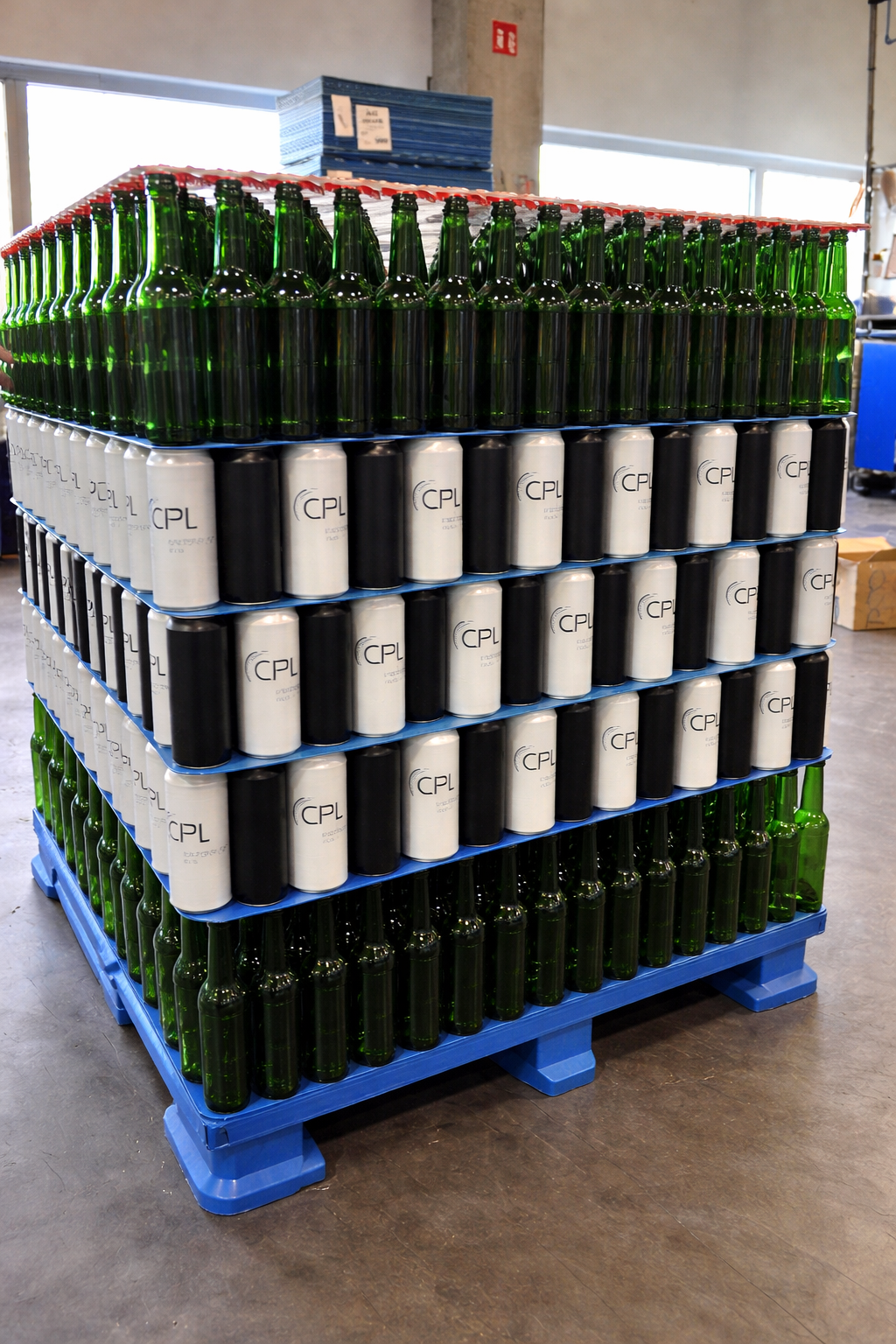
With Cartonplast reusable pallets, you move from a simple load carrier to a structured system of delivery, return, and professional washing. The result: a stable and transparent circulation structure across your supply chain.
What This Means for Your Business:
Reduce operational risk, gain full transparency over your material flows, and strengthen your environmental performance — all at the same time.
The Reality of the Status Quo
Wooden pallets are constantly in use: moving through warehouses, production lines, and transport operations. They are stacked, moved, exchanged, repaired, and reused. Along the way, hidden costs accumulate. Costs that rarely appear clearly in a single budget line but collectively destabilize your operational cost structure.
Breakage and Material Fatigue
Damaged pallets lead to production interruptions, complaints, or (in the worst case) product damage. Every failure triggers replacement procurement, often unplanned and at short notice. The result are higher costs and operational disruption.
Unplanned Replacement Purchases
Without transparency around inventory levels and life cycles, additional pallets must often be purchased spontaneously. This reduces liquidity and increases capital tied up in circulation stock.
Hygiene Risks and Quality Uncertainty
In sensitive industries, dirty or damaged load carriers quickly become a compliance risk. Additional inspections, manual rework, or blocked goods cost time and reduce operational efficiency.
Inefficient Return Processes
Unstructured return processes often result in pallet losses, additional search efforts, unnecessary transport movements, and increased administrative complexity across the supply chain.
Rising Disposal and Material Costs
Volatile raw material markets and stricter regulatory requirements continue to increase the cost of replacement, disposal, and procurement, particularly in single-use systems or short-lived pallet solutions.
Sustainability Is Not an “Add-On”
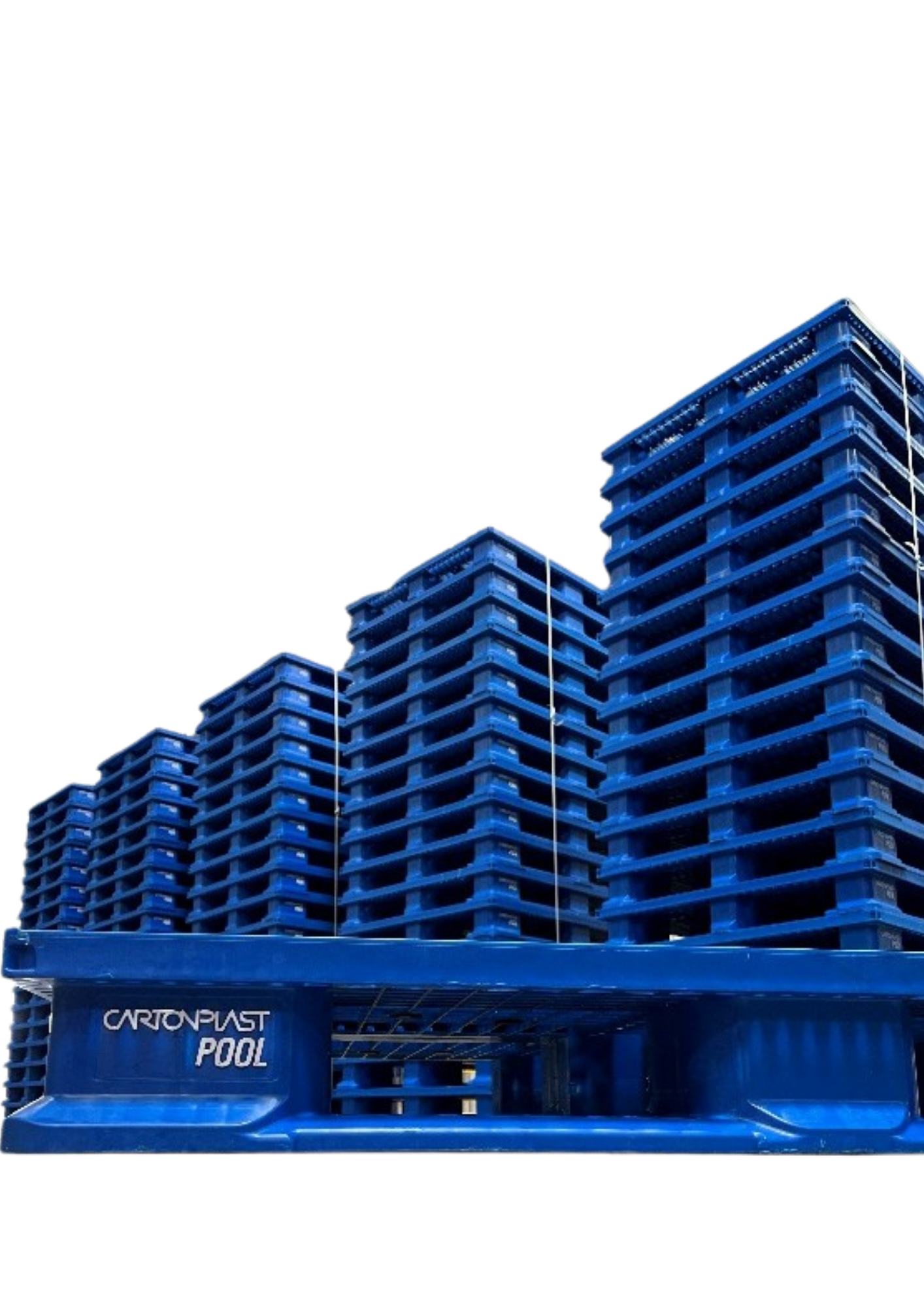
Reusable pallets are designed for high cycle counts as well as repairability and recyclability
The Cartonplast Reusable Pallet System is:
This not only reduces CO₂ emissions and material consumption but also extends pallet lifespan and lowers total system costs over the long term.
What Does This Mean for You? Predictable and stable cycles instead of pallet losses and unplanned replacements. Clearly lower costs per use across the entire life cycle (TCO = Total Cost of Ownership) and significantly reduced administrative effort thanks to a closed and clearly structured return process.
At the same time, you increase process reliability in production and logistics, reduce operational risks, and ensure compliance with regulatory requirements in the context of PPWR and EPR.
Instead of “Plastic vs. Wood”, we analyze real usage scenarios
Wooden Pallets May Appear Operationally Manageable
In practice, however, they create structural uncertainty within your supply chain

In the future, repairability alone will no longer be sufficient. Regulators increasingly require demonstrable reuse, documented cycles, and clearly defined responsibilities within the circulation system.
Without a robust system structure, the result is:
The pallet evolves from a simple C-part into a compliance and cash-flow issue.
What may appear today as an easy-to-manage everyday product quickly becomes, under growing regulatory pressure and increasing requirements, a cost, risk, and compliance factor within your supply chain.
A lack of transparency, pallet losses, volatile prices, and unclear responsibilities tie up capital, create internal friction, and turn a simple pallet into a structural source of uncertainty.
When cycles cannot be traced, inventories cannot be controlled, and quality is unstable, the risk ultimately falls on your organisation, operationally, financially, and from a regulatory perspective.
Identify Your Potential Now
We will get back to you with a structured initial assessment.
Are plastic pallets stronger than wooden pallets?
High-quality plastic pallets can be as strong or stronger than wooden pallets, depending on the design and materials used. Reinforced plastic pallets are engineered to handle heavy loads while maintaining consistent structural integrity over repeated use cycles, whereas wooden pallets often weaken after multiple uses.
How do plastic pallets perform in automated logistics systems?
Plastic pallets are ideal for automation and high-speed warehouse systems. Their precise dimensions, smooth surfaces, and uniform weight reduce the risk of jams, misalignment, or system downtime. Wooden pallets, by contrast, often vary in size and condition, which can disrupt automated handling equipment.
Are plastic pallets more hygienic than wood pallets?
Yes. Plastic pallets are non-porous and easy to clean, making them highly suitable for industries such as food, pharmaceuticals, and retail. Wooden pallets can absorb moisture, harbor bacteria, and are difficult to sanitize effectively.
Do plastic pallets last longer than wooden pallets?
Plastic pallets typically have a much longer service life. While wooden pallets may break or require repair after several cycles, plastic pallets can withstand hundreds of trips without losing structural integrity.
Are plastic pallets more sustainable than wood pallets?
When evaluated over their full lifecycle, plastic pallets can be more sustainable due to their longer lifespan, lower replacement frequency, and recyclability. Many plastic pallets are manufactured from recycled materials and can be recycled again at end-of-life, supporting circular economy models.
How do plastic pallets impact total cost of ownership?
Although plastic pallets usually have a higher upfront price, they often deliver lower total cost of ownership (TCO) thanks to reduced breakage, lower maintenance, longer lifespan, and fewer product damages during transport.
Are plastic pallets suitable for international shipping?
Yes. Plastic pallets do not require ISPM-15 heat treatment, which is mandatory for wooden pallets used in international shipping. This simplifies cross-border logistics and eliminates the risk of compliance issues.
Do plastic pallets reduce product damage?
Plastic pallets often provide better load stability and consistent support, reducing the risk of damaged goods. Their smooth edges and lack of splinters also help prevent packaging damage.
Are plastic pallets safer for workers?
Plastic pallets contribute to improved workplace safety. They do not produce nails, splinters, or broken boards, which are common hazards with damaged wooden pallets.
How do plastic pallets perform in harsh environments?
Plastic pallets perform well in cold storage, humid environments, and outdoor applications. They resist moisture, chemicals, and temperature fluctuations much better than wood.
Can plastic pallets support circular logistics models?
Yes. Plastic pallets are well suited for closed-loop and pooling systems. Their durability and recyclability enable efficient reuse over many cycles, which supports circular logistics strategies.
Do plastic pallets reduce operational downtime?
Because plastic pallets maintain consistent dimensions and structural reliability, they reduce equipment stoppages in automated systems and minimize handling disruptions.
Are plastic pallets customizable for specific supply chains?
Plastic pallets can be engineered for specific load capacities, racking requirements, automation systems, or industry standards. This design flexibility is often not possible with traditional wooden pallets.
Why are many companies switching from wood to plastic pallets?
Companies are switching because plastic pallets deliver greater reliability, hygiene, automation compatibility, and long-term cost efficiency, making them better aligned with the demands of modern supply chains.
Why are plastic pallets becoming more popular in logistics?
Plastic pallets are gaining popularity because they offer consistent quality, durability, and hygiene advantages compared with traditional wooden pallets. Unlike wood, plastic pallets do not splinter, absorb moisture, or degrade over time. This makes them particularly suitable for automated warehouses, international shipping, and hygienic supply chains.